Tibbi Sahib Road, Bagla Market, Sri Muktsar Sahib Open Mon to Sat, 10:00 AM to 7:00 PM +91 98555 86300 WhatsApp IG YT
Call +91 98555 86300 Chat on WhatsApp
Measure at Home

Size Guide and How to Take Measurements

Take these correctly once and every suit you order fits. Get one wrong and the whole garment sits off, no matter how well it is stitched.

To measure for a salwar kameez at home, wear a well fitting garment, stand straight, and use a soft measuring tape held snug but not tight. The core measurements are bust, waist, hip, shoulder, kameez length, sleeve length, armhole, neck depth front and back, salwar length and bottom width. Have someone else take them where possible, since measuring your own back and shoulder is unreliable. Nirmal Boutique in Sri Muktsar Sahib takes fresh measurements in person for every order, so this guide is for reference and for sending an approximate size ahead.

Before You Start

Five Rules That Decide Everything

  • Get someone to help. Shoulder, back neck and armhole cannot be measured accurately on yourself.
  • Wear the right innerwear. Bust and waist change noticeably with what you have on underneath.
  • Stand normally. Do not hold your breath or pull your stomach in. The suit has to fit the way you actually stand.
  • Snug, not tight. The tape should sit flat against the body without pressing in. Ease is added by us afterwards.
  • Use a cloth tape. A metal or plastic scale will not follow the body curve and will read short.

Write every number down as you go, in inches, and keep the list on your phone. We record measurements against your name too, so repeat orders do not need a second session.
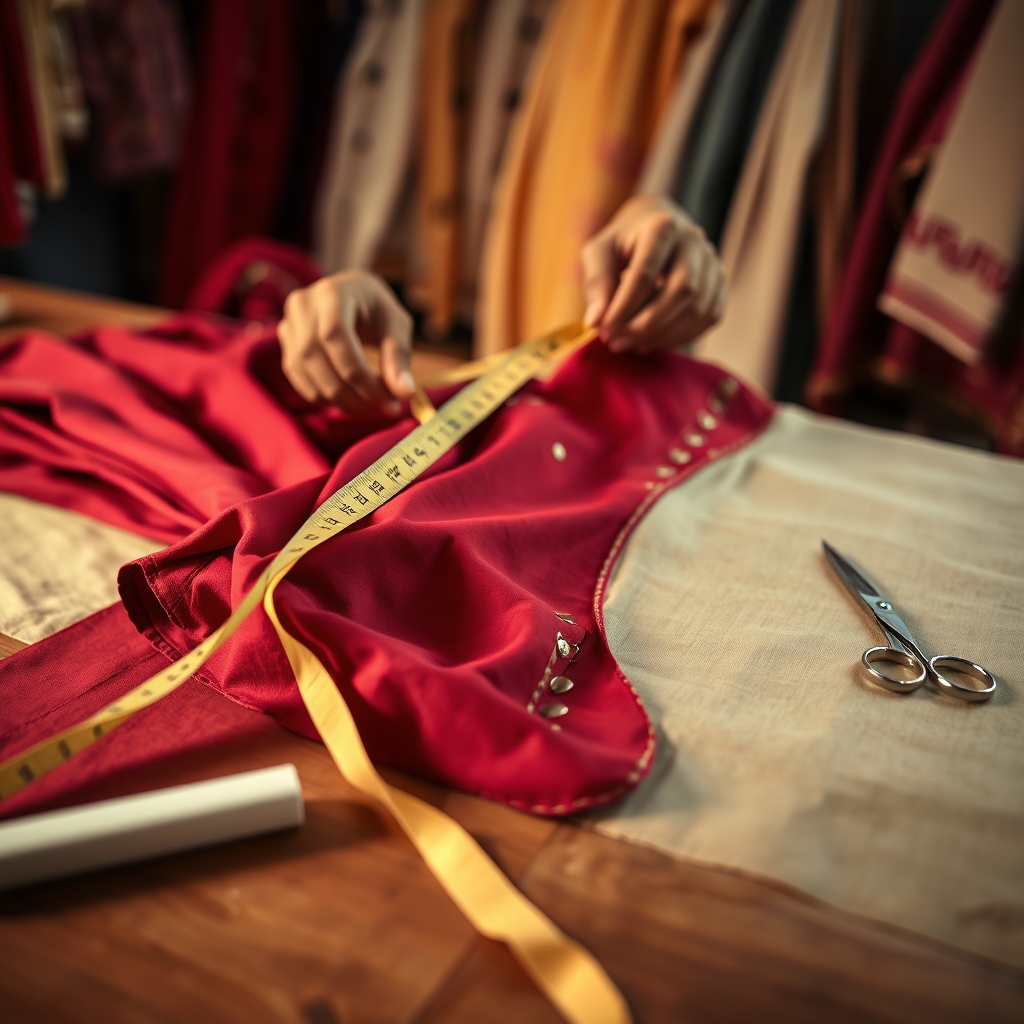
Measuring tape across maroon suit fabric, taking measurements for stitching at Nirmal Boutique, Sri Muktsar Sahib
Kameez and Kurti

Upper Body Measurements

MeasurementHow to take itCommon mistake
ShoulderAcross the back, from the tip of one shoulder bone to the other, following the natural curve.Measuring straight across instead of over the curve, which reads short.
BustAround the fullest part of the chest, tape level all the way round and flat across the back.Tape riding up at the back, which adds a false inch.
WaistAround the narrowest part of the torso, usually just above the navel.Pulling the stomach in while measuring.
HipAround the fullest part of the hips, feet together, tape parallel to the floor.Measuring too high, at the hip bone rather than the fullest point.
Kameez lengthFrom the shoulder seam point at the neck, straight down to where you want the hem to end.Measuring from the collarbone instead of the shoulder point.
Sleeve lengthFrom the shoulder tip down the outside of the arm, arm slightly bent, to where the sleeve should end.Measuring with the arm held dead straight, which comes out short when worn.
ArmholeAround the arm at the underarm, tape passing over the shoulder tip.Pulling too tight, which produces a sleeve that binds.
Sleeve widthAround the arm at the point the sleeve will end, plus finger room.Taking it flat against the skin with no ease.
Neck depth, frontFrom the base of the neck straight down the front, to where you want the neckline to sit.Guessing rather than marking it against a suit you already like.
Neck depth, backFrom the base of the neck down the back, measured by someone else.Attempting it yourself in a mirror.

Neck styles change how the depth reads. See the neck design catalogue to pick a shape before you measure.

Salwar, Plazo and Bottoms

Lower Body Measurements

MeasurementHow to take itWhy it matters
Salwar lengthFrom the waist straight down the side, to the ankle or wherever the hem should sit.Decides whether the salwar gathers correctly at the ankle or drags.
Waist, bottomAround the waist where the salwar will actually sit, which is often lower than the natural waist.Gets the elastic or nada tension right.
Hip, bottomAround the fullest part of the hips, same as the upper body hip measurement.Controls how the salwar falls from the waist.
ThighAround the fullest part of the upper thigh.Critical for fitted styles like churidar and cigarette pants.
KneeAround the knee, slightly bent.Needed for plazo, sharara and any structured flare.
Bottom widthAcross the opening at the ankle, the finished width you want.The single biggest style difference between a plazo, a plain salwar and a churidar.
Patiala fullnessDiscussed at the shop rather than measured, based on how much pleat volume you want.Fullness changes the fabric quantity and therefore the price.

Bottom width is the number most people get wrong when ordering remotely. If you are unsure, measure a bottom you already own and like, laid flat, then double that width.

The Easiest Method

Copy a Garment You Already Love

1

Pick the Best Fitting Suit You Own

Not the newest one, the one you keep reaching for because it sits right.

2

Lay It Flat and Smooth

On a bed or table, seams straight, no bunching or stretch anywhere.

3

Measure the Garment, Not the Body

Chest and waist measured flat then doubled, plus length, sleeve and bottom width.

4

Or Simply Bring It In

Honestly the best option. Bring the garment and we copy the fit exactly, no numbers needed.

This is more reliable than body measurement for most people, because it captures the ease and fit you already know you are comfortable in.

Your Chart

Write These Down and Keep Them

Print this page or copy the list into your phone. Send it on WhatsApp and we can advise before you visit.

MeasurementYour value (inches)MeasurementYour value (inches)
Shoulder Salwar length 
Bust Waist, bottom 
Waist Hip, bottom 
Hip Thigh 
Kameez length Knee 
Sleeve length Bottom width 
Armhole Neck depth, front 
Sleeve width Neck depth, back 

Measurements sent ahead are treated as a guide only. We take fresh measurements in person at your visit, because a number on a message and a body in the shop are not the same thing.

Questions

Measurement FAQs

Should I add extra inches for a loose fit?

No. Give us the true body measurement and tell us how loose you want it. We add the ease during cutting. If you add your own allowance on top of ours, the suit comes out oversized.

Can I send measurements on WhatsApp instead of visiting?

You can send them ahead so we can advise on fabric and design, but we still take fresh measurements in person before cutting. Numbers taken at home vary a lot depending on tape tension and posture.

What if my measurements change before delivery?

Tell us at booking if you expect your size to shift. We leave extra seam allowance where possible and adjust at the trial fitting. See the bridal timeline for how trials are scheduled.

Do you keep my measurements on file?

Yes, recorded against your name, so a repeat order does not need a full measurement session again. We still check them at each visit rather than assuming nothing has changed.

My readymade dress does not fit. Do I need new measurements?

Not necessarily. Bring the garment and wear it, and we mark the changes directly on the body. That is how alteration work is done.

Which measurement do people get wrong most often?

Bottom width for salwar and plazo, and back neck depth. Both are hard to judge on yourself. If you are unsure of either, copy them from a garment you already own and like.

Ready to order? See what we stitch, check indicative pricing, or visit the boutique in Bagla Market.

Scroll to Top
Ready when you are

Ready to get your suit stitched exactly the way you imagined?

Every kind of suit work under one roof. Walk in with a photo, a fabric or just a function date, and we will take it from there.

Call WhatsApp Directions Book